

Hiring someone as an independent contractor can give a business flexibility. However, simply calling a worker a contractor—or paying them with a 1099—does not automatically make them one.
Consider a Utah contractor who hires someone to help on several jobs. The worker is called a 1099 contractor, but the business sets his schedule, tells him how to complete each task, provides his tools, and pays him by the hour.
If that worker is injured, the business may discover that he was actually functioning more like an employee.
That distinction matters because misclassified workers can lose access to protections such as workers’ compensation, while the business may face claims, penalties, unpaid premiums, and other financial consequences
A 1099 Form Does Not Decide Worker Status
Utah workers’ compensation law focuses on the actual working relationship, not simply the title used in an agreement or the tax form issued at the end of the year.

Under Utah law, an independent contractor generally must:
- Remain independent in how the work is completed.
- Not be subject to the hiring company’s routine control.
- Be hired for a definite job or specific piece of work.
- Be responsible for producing the agreed-upon result.
The more control a business has over how, when, and where someone works, the more likely that person may be considered an employee.
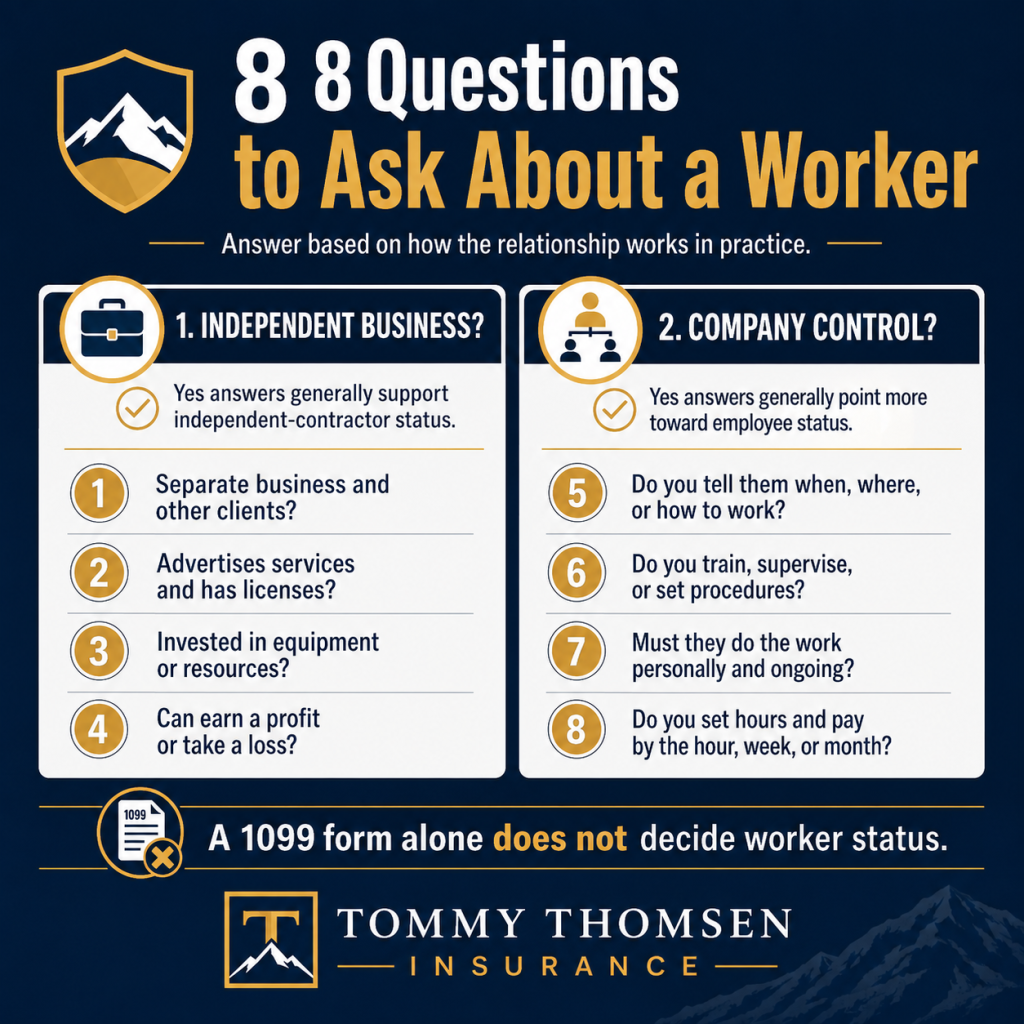
8 Questions to Ask About a Worker
The following simplified questions can help identify if a worker would be classified as an independent contractor or an employee.
Answer each question based on how the working relationship operates in practice—not only what the contract or tax form says.
Does the Worker Operate an Independent Business?
A Yes answer generally supports independent-contractor status.
- Does the worker operate a separate business and offer similar services to other customers?
- Does the worker advertise their services and hold any required business, trade, or professional licenses?
- Has the worker invested in the equipment, facilities, or resources needed to operate their business?
- Can the worker make a profit or experience a financial loss based on their own pricing, expenses, and business decisions?
Does Your Company Control the Worker?
A Yes answer generally points more toward employee status.
- Do you tell the worker when, where, or how the work must be performed?
- Do you train, supervise, or require the worker to follow your company’s specific procedures, pace, or sequence?
- Must the worker personally perform the services, and is the relationship ongoing rather than limited to a specific project?
- Do you set the worker’s hours and pay them regularly by the hour, week, or month?
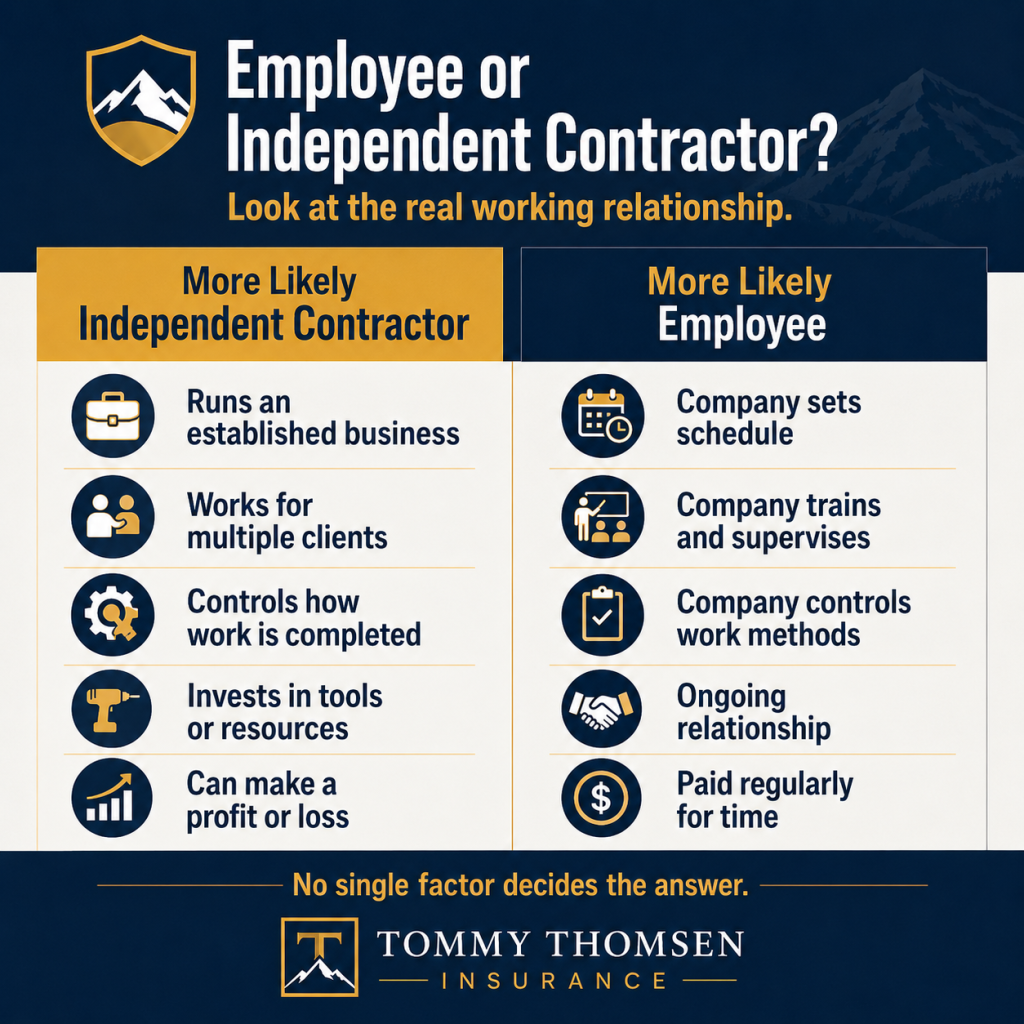
Understanding the Results
A worker is more likely to be an independent contractor when they:
- Operate an established business
- Serve multiple customers
- Advertise their services
- Control how the work is completed
- Invest in their own business
- Have an opportunity for profit or loss
A worker is more likely to be an employee when the company:
- Sets their schedule
- Trains and supervises them
- Controls their work methods
- Requires personal service
- Maintains an ongoing relationship
- Pays them regularly for their time
A 1099 form or independent-contractor agreement does not determine employment status by itself. Under the Utah guidelines, the worker generally must operate an independently established business and remain free from the company’s control over how the services are performed.
This checklist is a general screening tool and does not provide a final legal determination. The importance of each factor may vary depending on the occupation and facts of the working relationship.