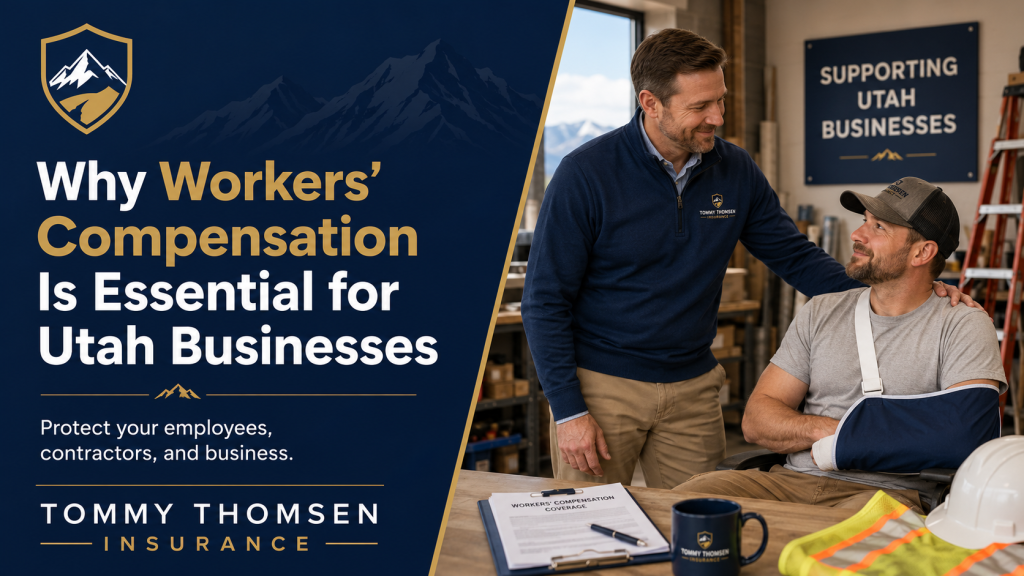
Running a business comes with risks, but few are as serious as someone getting hurt while working for you. Workers’ compensation helps protect your employees, contractors, business, and everything you have worked hard to build.
A 1099 Form May Not Protect Your Business
Imagine that a Utah contractor hires a 1099 worker to help complete a construction project. The worker brings a helper to the jobsite.
While carrying materials down a ladder, the helper falls and suffers a serious injury.
The contractor believed everyone was covered because the worker received a 1099 instead of a W-2. However, no one verified whether the worker had workers’ compensation insurance or a valid Utah workers’ compensation coverage waiver.
Suddenly, the businesses involved may be facing medical expenses, lost wages, legal questions, and significant financial exposure.
A tax form does not make these responsibilities disappear.

Construction Helpers Can Create Additional Exposure
This is especially important in construction.
A self-employed contractor may qualify for a waiver when working alone. However, when that contractor brings helpers onto the job, those helpers may be considered the contractor’s employees. Because a Utah coverage waiver is intended for a business with no employees, bringing helpers can change the contractor’s coverage responsibilities.
Utah expects a business hiring a contractor to verify that the contractor has complied with workers’ compensation requirements. If the contractor is uninsured and has employees, the hiring business may be treated as the workers’ statutory employer and could become responsible for workers’ compensation benefits.
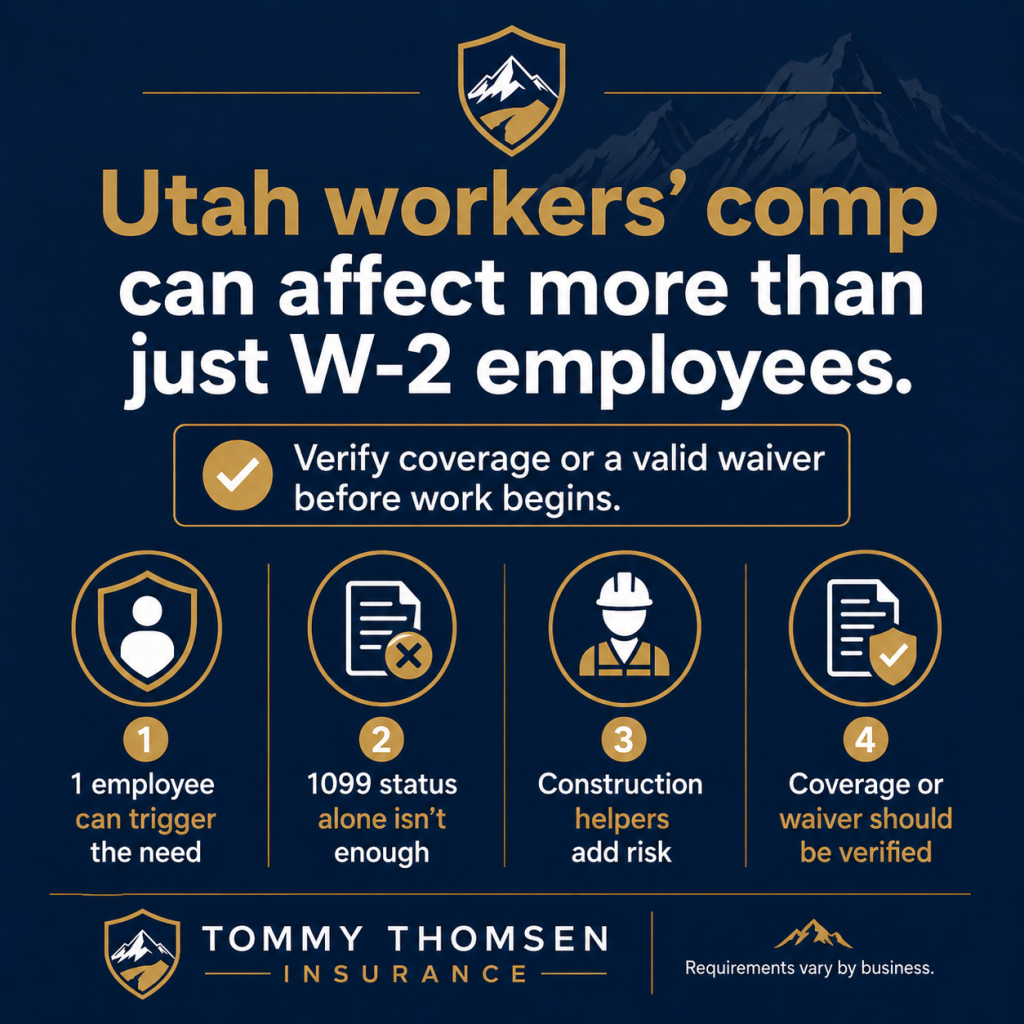
Utah Coverage Can Begin With One Worker
In Utah, most businesses must carry workers’ compensation insurance when they have even one employee, including part-time employees. Coverage generally begins as soon as the employee starts working.
Businesses also need to be careful when hiring 1099 workers and subcontractors. To qualify as an independent contractor, the worker must actually operate independently, remain free from routine control, and be hired to complete a definite job or piece of work. Simply calling someone an independent contractor or issuing a 1099 does not settle the question.
A genuine independent contractor who has no employees may qualify for a Workers’ Compensation Coverage Waiver from the Utah Labor Commission. The waiver confirms that the contractor has no employees and has provided evidence of being an independently established business.
Before work begins, business owners should verify that every contractor provides either:
- Proof of active workers’ compensation coverage, or
- A valid Utah workers’ compensation coverage waiver.
Workers’ Compensation Protects Both Sides
For a covered workplace injury, workers’ compensation may help provide:
- Necessary medical treatment
- Partial replacement of lost wages
- Disability benefits
- Protection for the employer through the workers’ compensation system
Without required coverage, a business may face penalties, interruption of business operations, and the loss of protections that normally limit workplace injury lawsuits.
Workers’ compensation is not only about following the law. It is about making sure an injured worker receives help while protecting the financial future of the business.
Protect Everyone Working for Your Business
Whether someone receives a W-2 or a 1099, do not assume your business is protected.
Verify workers’ compensation coverage, collect valid waivers when appropriate, and make sure subcontractors who use helpers have the proper protection in place.
At Tommy Thomsen Insurance, we help Utah business owners understand their workers’ compensation options and identify potential coverage gaps before an accident happens.
Request a Workers’ Compensation Quote
Protect your employees, contractors, and business.
Request a quote through our website or call Tommy Thomsen Insurance at 801-982-7200. We will learn about your business, answer your questions, and help you find the right coverage.
This article provides general information and is not legal advice. Worker classification and workers’ compensation requirements depend on the facts of each working relationship. Consult a qualified insurance or legal professional regarding your specific business.